
Mouthpieces
The Orchestral Family
A mouthpiece is a connected geometry. The Orchestral family is considered here through the choices that shape contact, resistance, and response—not as a catalog of interchangeable size labels.
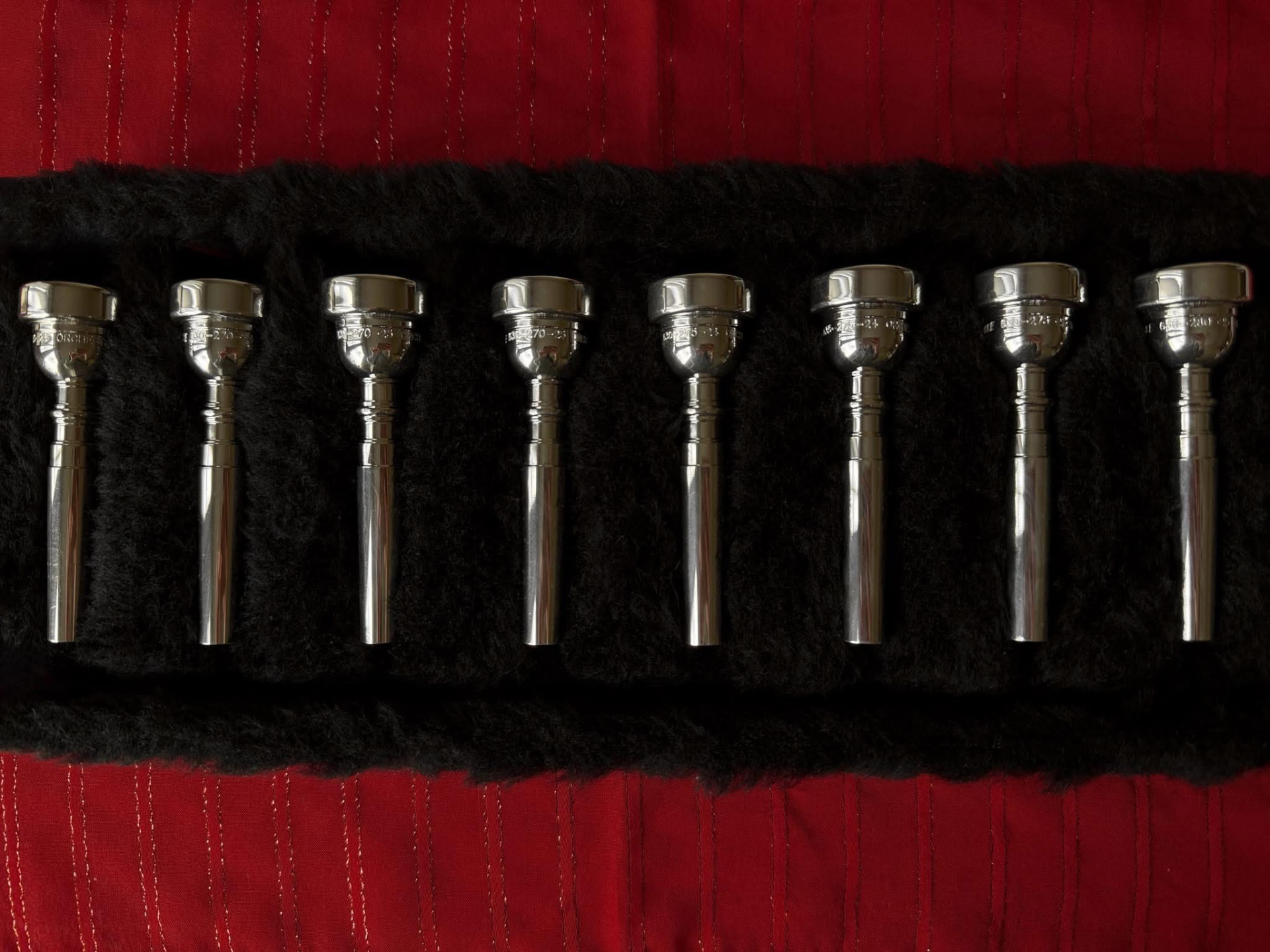
Where the Player Meets the Mouthpiece
Diameter describes only part of the rim. Its width, contour, and inner edge affect where contact is felt and how the lips are supported. The cup beneath it introduces another set of choices: depth and contour are distinct, so similar depth designations need not imply a similar feel.
Historical Parke materials identify these as separate configuration considerations. For the player, the question is how comfortable contact and a useful response coexist across the passages being played.
Resistance Is a Relationship
The throat and backbore contribute to the internal air passage, but neither acts independently of the cup or the trumpet’s leadpipe. A change that feels freer to one player may feel less centered to another. More space, less resistance, or a different rim is not automatically an improvement.
Orchestral work makes those tradeoffs tangible: the feel of a soft entrance may be as important as a sustained forte, and flexibility must be considered alongside security. The full configuration should be evaluated in the musical situations that matter to the player.
Sizing, geometry, and the historical comparison chartThe photographs and historical references do not establish current inventory. Discuss available configurations and component compatibility directly with Parke.